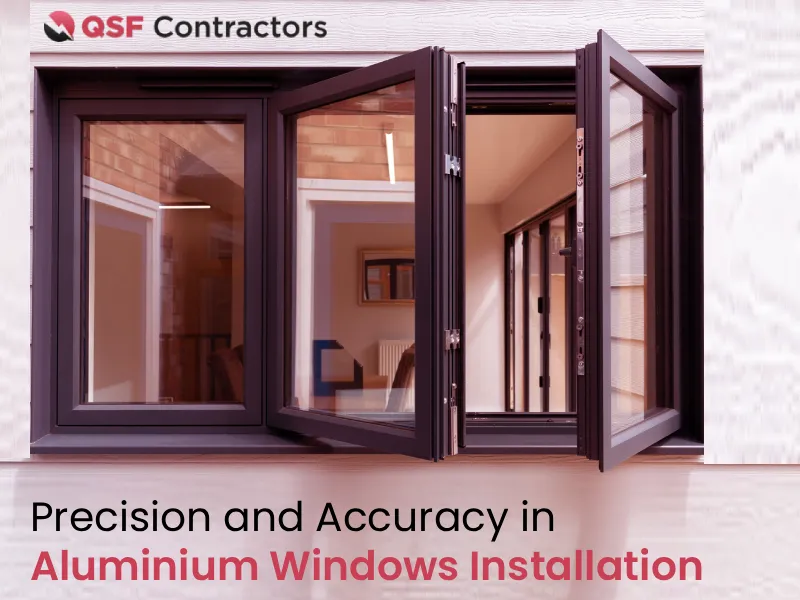
Aluminium windows have been used in commercial and industrial premises due to their consistency in structures, design flexibility, and their ability to match modern structural design. With improvements in construction standards, a trained aluminium windows installer and a systematic procedure for aluminium windows installation are required.
Each step, from the preparation to the regulation, is to be addressed in detail and follow professional recommendations.
Key Elements of Aluminium Windows Installation
Measurement & Opening Preparation
- Measure the diagonal, height, and width of the opening
- Check on rough surfaces
- Proper structural unusual before the frame construction
Frame Positioning
- Attach the frame with spacers and levelers
- Frame positioning by architectural design
Fixings and Anchors
- Choose the fasteners appropriate to the wall type and load
- Frame anchor firmly to withstand the wind pressure and movement
Glazing Placement
- Choose glazing (single, double, or performance glass)
- Fit glazing beads, pressure plates, and gaskets
- Ensure that the pressure is uniform, not uneven, to prevent vibration
Sealant Application
- Use specialised sealant between the wall and the frame.
- Maintain a steady flow of sealant to prevent air and moisture.
Hardware Adjustment
- Check handles, locks, slide-welches, hinges, etc.
- Provide smooth and well-aligned operation
Material Compatibility and Structural Considerations
In the case of aluminium windows installation, the installer attempts to analyze the composition of the walls, as various materials are used, including brick, concrete, block, or metal, that must be fastened using certain techniques. Before selecting anchors and reinforcement, load-bearing factors, wind exposure, and structural alignment are analysed.
Alignment or sealing can be affected by dust, loose plaster, moisture, or debris. The installer can place the frames perfectly without deformity due to a stable base.
Site Assessment and Installation Environment
The location of installation affects the method, fastening design, and implementation of the application. Before commencement, factors such as humidity, wall temperature, wind pressure, and exposure levels are examined.
Interior finishes, electrical wiring, and electrical insulation layers should be considered to prevent blockage during and after installation. Installers usually communicate with construction teams to ensure that aluminium windows are installed in accordance with the overall structural arrangement.
Powder-coated or anodized aluminium frames should be installed by protective handling. The surfaces should be clean and free of any scratches, and protective film should be preserved until the final stage of installation.
Final Inspection and Performance Verification
Installers perform checks after the structural and glazing processes have been completed. The checks help ensure that the aluminium window is locked and in position. Installers can also offer general instructions regarding cleaning, handling, and routine checks to ensure the consistency of operation.
In modern structures, the use of aluminium windows has remained popular due to their stability, appearance, and alignment with various architectural styles. The precision and accuracy with which aluminum windows are installed significantly impact the performance of these systems. An informative aluminium windows installer will ensure that measurements are made, frame anchoring, glazing configuration, and hardware alignment are done according to industry guidelines.